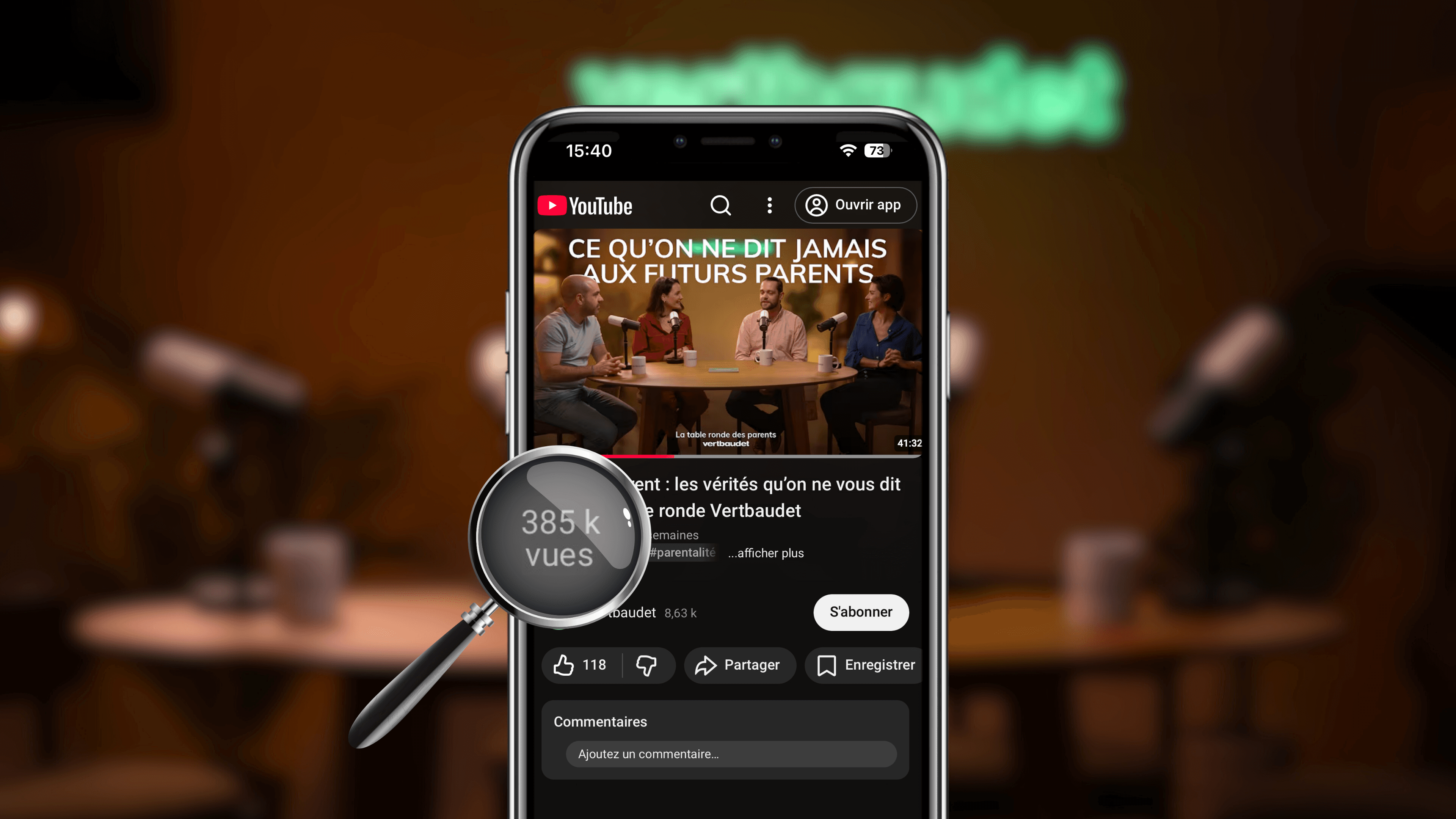
YouTube Podcasts: How to Create a Captivating Video Podcast and Grow an Audience
The YouTube podcast is experiencing spectacular growth. In just a few years, it has evolved from a secondary format into a true pillar of digital content. Today…
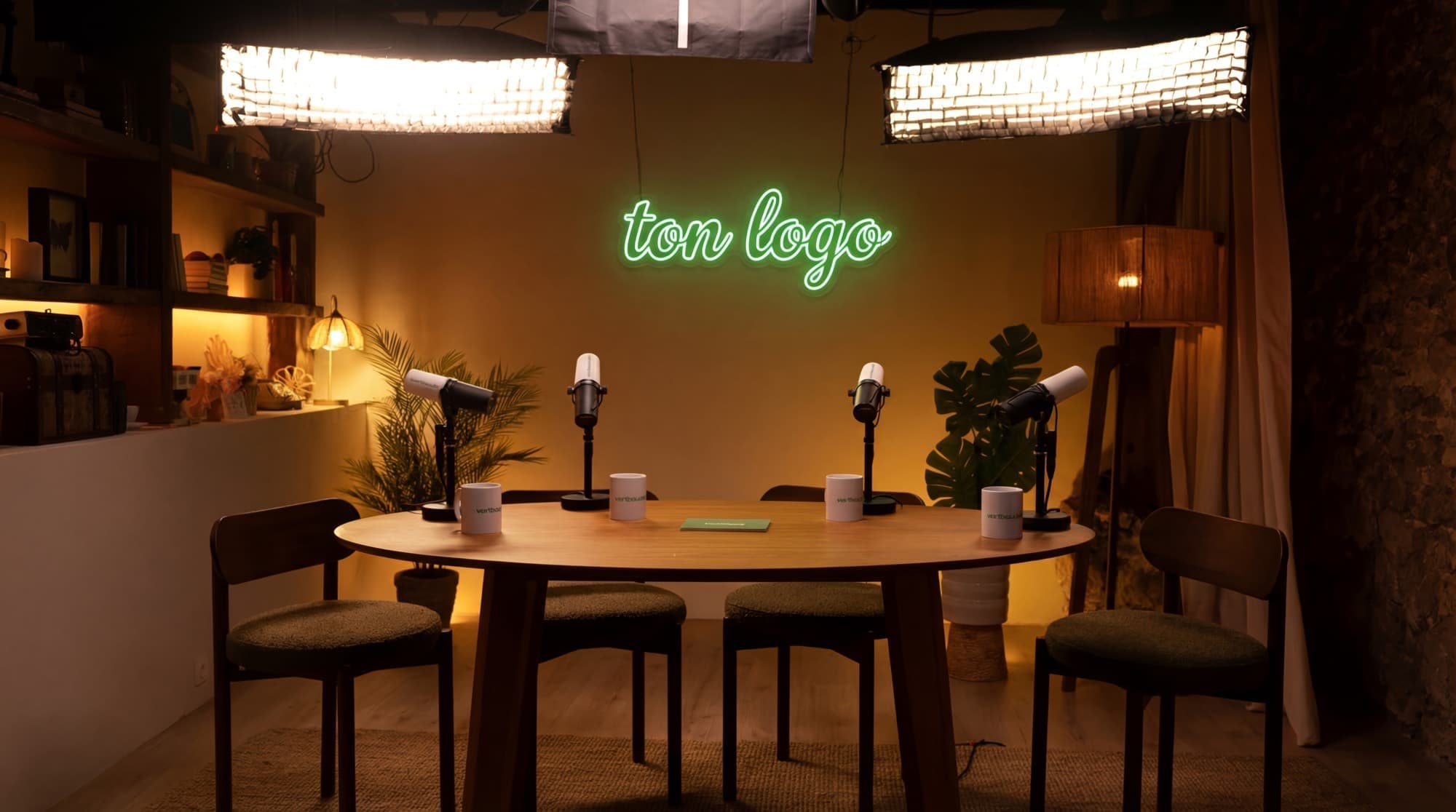
Podcasting has seen impressive growth over the past few years, and recording in a professional podcast studio is gradually becoming the go-to solution for producing high-quality content. Entrepreneurs, content creators, brands, and experts use this format to share ideas, tell stories, and pass on their expertise. Accessible, authentic, and immersive, the podcast builds a direct relationship with its audience.
But producing a quality podcast isn't simply a matter of recording a conversation with a microphone. The recording environment, audio quality, visuals, and editing all strongly influence how the public perceives the content. Even the most relevant material quickly loses its impact when the technical execution doesn't hold up.
That's precisely why the professional podcast studio makes so much sense. Unlike an improvised home recording, a studio offers optimal conditions for producing content that is clear, immersive, and credible.
So why record your podcast in a professional studio rather than at home? What concrete benefits does this solution bring to your content and your brand image? Let's explore.
Discover the CreativGen studio and turn your podcast idea into quality audio and video content.
The success of podcasting is no accident. The format perfectly matches today's consumption habits: listening to or watching content while doing something else. On public transport, while working, or during a workout, podcasts integrate easily into everyday life.
Businesses have also recognized the potential of the podcast. Today it is used to:
Share expertise
Develop a personal brand
Strengthen corporate communications
Build an engaged community
A professional podcast can become a genuine visibility and marketing tool. Some brands even use it as a fully-fledged media channel to tell their story or interview industry experts. But to capture attention in a content-saturated world, quality becomes essential.
Many creators naturally start by recording their podcast at home. It's simple, cost-effective, and quick to set up. Yet this approach soon reveals its limits, especially when the goal is to produce professional content.
A home-recorded podcast can suffer from several issues: inconsistent audio quality, a noisy environment, a lack of visual cohesion, and technical difficulties.
These elements may seem minor, but they directly affect the experience of the viewer or listener.
In a podcast, sound is the central element. If the audio is poor, even the best content can become difficult to listen to.
Recording at home often exposes you to various types of noise:
Outside sounds (cars, construction, neighbours)
Room reverberation
Echo from hard surfaces
Volume imbalances between speakers
Without proper acoustic treatment, these problems quickly become noticeable.
Professional studios, on the other hand, are designed to eliminate these disturbances. The walls, materials, and room layout are engineered to absorb resonance and deliver a clear, balanced sound.
The result: a far more enjoyable listening experience.
Another frequent obstacle involves equipment. A home-recorded podcast typically relies on basic gear: a USB microphone, a simple headset, and recording software. This may be enough to get started, but limitations surface quickly.
A professional podcast studio provides far more capable equipment:
Broadcast-quality microphones
Professional audio interfaces
Mixing consoles
High-definition cameras
Appropriate lighting
This type of equipment immediately improves overall quality. The sound is more precise, the voice more natural, and the image more pleasant to watch.
Recording a podcast at home also means managing several technical aspects simultaneously.
For example:
Checking audio levels
Monitoring the recording
Adjusting microphone placement
Managing lighting if the podcast is filmed
All of this can quickly become stressful, especially during an interview or an important discussion.
In a professional studio, these constraints disappear. The technical team handles all adjustments while the participants can focus entirely on the conversation.
This detail often makes all the difference in how smoothly an episode flows.
Today, many podcasts are also filmed for distribution across various platforms. Visuals have therefore become an important element.
An improvised backdrop in a living room or home office can work for informal content. But for a company or expert looking to strengthen their credibility, it can come across as less professional.
A podcast studio offers a visually coherent environment:
A well-designed set
Appropriate lighting
Professional framing
A consistent visual atmosphere
The goal is simple: to create an immersive experience that showcases both the speakers and the content.
In the world of podcasting, first impressions are decisive. Listeners often decide within a few seconds whether to keep listening or move on to something else.
Clear sound, polished visuals, and a professional environment immediately strengthen a podcast's credibility.
Conversely, insufficient technical quality quickly gives the impression of amateur content, even when the subject matter is genuinely interesting.
That's why more and more creators and companies choose to record their podcasts in a professional studio. This solution improves the overall output while simplifying production.
Creating a podcast at home seems straightforward at first. Many creators begin with a microphone, a computer, and a corner of their desk transformed into a makeshift studio. On paper, the setup looks adequate. In practice, the situation often becomes more complicated.
Over time, several obstacles emerge: technical quality varies, organisation becomes harder, editing takes longer, and visual consistency remains limited. These constraints frequently hold a podcast back, especially when the goal is to produce professional, regular content.
Let's look at why home recording quickly reaches its limits.
Producing a podcast takes far more than simply pressing "record". Behind every episode, there are multiple technical steps that can quickly become time-consuming.
When recording at home, you often have to handle everything yourself:
Microphone placement
Audio level management
Audio and video recording
Equipment checks
Troubleshooting technical issues
And of course, all of this must be monitored simultaneously with the conversation, which isn't always easy.
A poorly positioned microphone, a disconnected cable, or an audio level that's too low can ruin an entire episode. And unfortunately, you sometimes only notice the problem after the recording is done.
In a professional podcast studio, these aspects are handled by technicians or through an optimised configuration. Participants can then focus entirely on what matters most: the discussion.
A home-recorded podcast often demands far more production time than initially anticipated.
Take a simple example. For a 30-minute episode, you typically need to:
Set up the equipment
Test the microphones
Adjust the lighting
Check the cameras
Record the episode
Transfer the files
Complete the edit
All told, a single episode can easily represent several hours of work.
And that time increases further if the podcast includes video, remote interviews, or technical adjustments.
In a professional podcast studio, the setup is already ready. The equipment is installed, calibrated, and optimised. Recording can begin immediately, saving valuable time.
For companies or creators producing content on a regular basis, this difference quickly becomes significant.
Today, many podcasts are no longer purely audio. They are also filmed for distribution across multiple platforms.
This evolution transforms the podcast into fully-fledged hybrid content, both audio and video, which raises production expectations considerably.
Home recording often presents several visual constraints:
An improvised backdrop
Inconsistent lighting
Approximate framing
An unattractive background
Even with strong content, these elements can give an amateur impression.
A professional podcast studio typically features a set designed for on-camera performance. The lighting is balanced, camera angles are carefully considered, and the visual environment is coherent.
The result is a far more immersive experience for the viewer.
When producing a podcast alone, certain mistakes come up repeatedly. They're not necessarily serious, but they can undermine the overall quality of the content.
For example:
Speaking too far from the microphone
Recording in a room with too much echo
Using insufficient lighting
Forgetting to check audio levels
Neglecting the final edit
These problems are extremely common among first-time creators, and they can be discouraging when episodes don't turn out the way you hoped.
A professional podcast studio helps avoid most of these pitfalls. The equipment is appropriate, the environment is optimised, and the technical team ensures the recording goes smoothly.
This results in a podcast that is more fluid, more enjoyable to listen to, and more pleasant to watch.
Consistency is a key factor in a podcast's success. Publishing episodes on a regular basis helps build audience loyalty and grow visibility. But maintaining that pace can become difficult when production relies entirely on a domestic setup.
Between technical constraints, editing, and organisation, producing an episode can take a considerable amount of energy. Some creators end up spacing out their releases, or stopping their podcast altogether.
A professional podcast studio simplifies this logistics challenge. Recording sessions can be planned in advance, and multiple episodes can be recorded in a single session. This approach makes it far easier to maintain a regular publishing schedule without being overwhelmed by production.
For a company, entrepreneur, or expert, a podcast is often a strategic communication tool. It provides a platform to share expertise, interview guests, and build brand visibility.
In this context, the quality of the podcast directly reflects the brand's image.
A podcast recorded in good conditions immediately conveys an impression of professionalism and credibility. Conversely, an approximate production can diminish the impact of the message.
That's why many brands today choose to record their podcast in a professional studio. This solution guarantees a higher-quality output and strengthens the project's overall credibility.
Faced with the limitations of home recording, a growing number of creators and companies choose to produce their content in a professional podcast studio. And it's not just a matter of comfort.
A studio brings several concrete advantages: technical quality, time savings, visual consistency, and a better audience experience. These elements play an important role in how a podcast is perceived, and in its ability to attract and retain listeners.
Let's look at why a studio can completely transform podcast production.
In a podcast, sound dominates the experience. It is the central element of listening. Even when the content is genuinely interesting, poor audio quickly discourages the audience.
A professional podcast studio provides optimal acoustic conditions. The walls, materials, and room layout are designed to reduce echo and absorb unwanted noise.
This configuration delivers:
Cleaner sound
More natural voices
Better balance between speakers
A more comfortable listening experience
Equipment also plays a key role. Studios typically use professional microphones, high-performance audio interfaces, and mixing consoles that allow real-time level adjustment. The difference is immediately audible: a podcast that's more enjoyable to listen to and that keeps the audience engaged through to the end of the episode.
Contact the CreativGen team to record your podcast in a professional studio tailored to your project.
Today, many podcasts are filmed. This evolution transforms the podcast into hybrid content, both audio and video.
Podcast videos can be distributed across multiple platforms, reaching a wider audience. But this also raises the bar for visual quality.
A podcast studio enables professional video production through:
High-definition cameras
Appropriate lighting
Multiple camera angles
A coherent set design
These elements create a far more immersive visual experience. The viewer is no longer simply watching a conversation, they're entering a world.
For a brand podcast or corporate podcast, this visual dimension can strengthen identity and credibility.
Producing a podcast already takes time: topic preparation, research, inviting guests, episode promotion. Adding technical management on top can quickly become burdensome.
In a professional podcast studio, the setup is already in place. The equipment is installed, microphones are calibrated, and lighting is optimised.
Recording becomes much simpler:
Guests arrive
They get settled
The episode begins
This time saving allows everyone to focus on what truly matters: the conversation, the ideas, and the value delivered to the audience.
Some productions even record multiple episodes in a single session. This approach optimises the workflow and helps maintain a consistent publishing schedule.
Podcasts often revolve around interviews or discussions with guests. The recording environment has a significant influence on the quality of the exchange.
A professional podcast studio provides a more comfortable and immersive setting. Guests generally feel more at ease in an environment designed for conversation.
Several elements contribute to this experience:
A comfortable setup
A calm environment
Discreet technical configuration
A flattering visual setting
In these conditions, conversation becomes more natural. Participants can focus on the exchange without worrying about the technical side.
For companies, a podcast is often a strategic communication tool. It provides a platform to share ideas, interview experts, and strengthen brand visibility.
The quality of the podcast directly influences public perception.
Content recorded in a professional podcast studio immediately projects a more serious, structured image. The audience perceives the podcast as a genuine editorial offering rather than a casual improvised discussion.
This credibility can have a significant impact, particularly for:
Brand podcasts
Entrepreneur podcasts
Expert or consultant podcasts
A professional environment showcases the speakers and amplifies the impact of the message.
With the CreativGen studio, benefit from a set, lighting, and equipment designed to produce an immersive, credible podcast.
Recording a podcast can sometimes be stressful when everything relies on an improvised setup. Technical issues, last-minute adjustments, and unexpected interruptions can all disrupt the flow of an episode.
In a professional podcast studio, these issues are anticipated. Settings are configured in advance and equipment is built for reliable, consistent performance.
This organisation results in smoother, more natural episodes.
The conversation can unfold without interruption, improving the overall quality of the content.
A successful podcast doesn't just convey information, it creates an experience for the listener or viewer.
The combination of great sound, polished visuals, and a coherent visual environment makes an episode more compelling.
A professional podcast studio enables this sense of immersion. The viewer feels more engaged in the discussion, which encourages deeper engagement and long-term loyalty.
In a world where attention is a scarce resource, these details can make all the difference.
The podcast is no longer just a format used by content creators. An increasing number of companies, entrepreneurs, and experts are using it to share their vision, tell their story, and build their visibility.
When well produced, a podcast becomes a genuine media channel. It allows ideas to be shared, experts to be interviewed, and a direct relationship with the audience to be established. But achieving this requires quality production.
It is in this context that the professional podcast studio proves its full worth.
The brand podcast has become a widely used communication lever. Companies use it to explore topics related to their sector, interview experts, or share case studies and experience.
Unlike traditional advertising, a podcast enables more authentic and conversational content.
A professional podcast can thus be used to:
Share a company's expertise
Tell a brand's story
Interview partners or clients
Create a regular appointment with an audience
But for this content to be credible, production quality must match the ambition. Recording in a professional podcast studio guarantees a higher-quality output and reinforces the perception of professionalism.
Podcasting is also an excellent vehicle for developing a personal brand. Many entrepreneurs use this format to share their ideas, recount their experiences, and invite other experts to contribute.
This approach creates a direct bond with the audience. Long, authentic conversations generate a sense of closeness that few other formats can match.
In this context, podcast quality plays an essential role. A recording made in a professional podcast studio strengthens the image of expertise and lends greater credibility to the speakers.
Over time and across episodes, the podcast becomes a genuine showcase for an entrepreneur's or company's know-how.
Not every podcast needs a studio from day one. Many creators begin at home to test their concept and get comfortable with the format.
However, several situations can justify making the move to a professional podcast studio:
When a podcast becomes a communication tool for a company
When guests appear on a regular basis
When the podcast is filmed for video distribution
When technical quality becomes essential for brand image
In these cases, a studio improves overall production quality and simplifies the logistics of recording sessions.
A professional podcast studio is not simply a recording space. It is designed to facilitate content production and provide a comfortable experience for everyone involved.
Modern studios typically offer:
An acoustically optimised environment
Lighting designed for video
Professional cameras
A customisable set
Technical support throughout the recording
This configuration enables episodes to be produced in optimal conditions while simplifying the logistics.
For companies looking to produce content on a regular basis, this type of environment represents a genuine time-saver.
Discuss your project with the CreativGen team and discover how to produce a professional podcast that captures your audience's attention.
Podcasting has firmly established itself as an essential tool for sharing ideas, building an audience, and growing brand visibility. In an increasingly competitive content landscape, production quality plays a decisive role in capturing attention.
A professional podcast studio guarantees clear sound, polished visuals, and an environment perfectly suited to content creation. It simplifies production, streamlines the organisation of recording sessions, and improves the experience for everyone involved.
Whether you're launching a brand podcast, a corporate podcast, or an ambitious personal project, a professional studio elevates your content and amplifies its impact on your audience.
If you want to create a podcast under optimal conditions, the CreativGen studio is here to support you through the production and realisation of your episodes.
Is it worth recording a podcast in a professional studio? Yes. A professional studio delivers better audio and video quality. The acoustic environment, the equipment, and the technical support all significantly improve the final output of a podcast.
Can you record a professional podcast at home? It is possible to record a podcast at home, especially when starting out. However, sound quality, lighting, and set design can be limiting. A professional studio offers more optimal production conditions.
How much does it cost to record in a podcast studio? The price depends on the studio, the recording duration, and the services included (editing, video capture, production). Some studios offer packages tailored to both creators and businesses.
What equipment does a professional podcast studio use? A professional podcast studio typically uses broadcast-quality microphones, professional audio interfaces, high-definition cameras, and lighting designed for video capture.
Why do companies use a podcast studio? Companies use a podcast studio to produce quality content, strengthen their brand image, and create a media channel capable of sharing their expertise with their audience.
Quick confirmation · No upfront payment
The YouTube podcast is experiencing spectacular growth. In just a few years, it has evolved from a secondary format into a true pillar of digital content. Today…
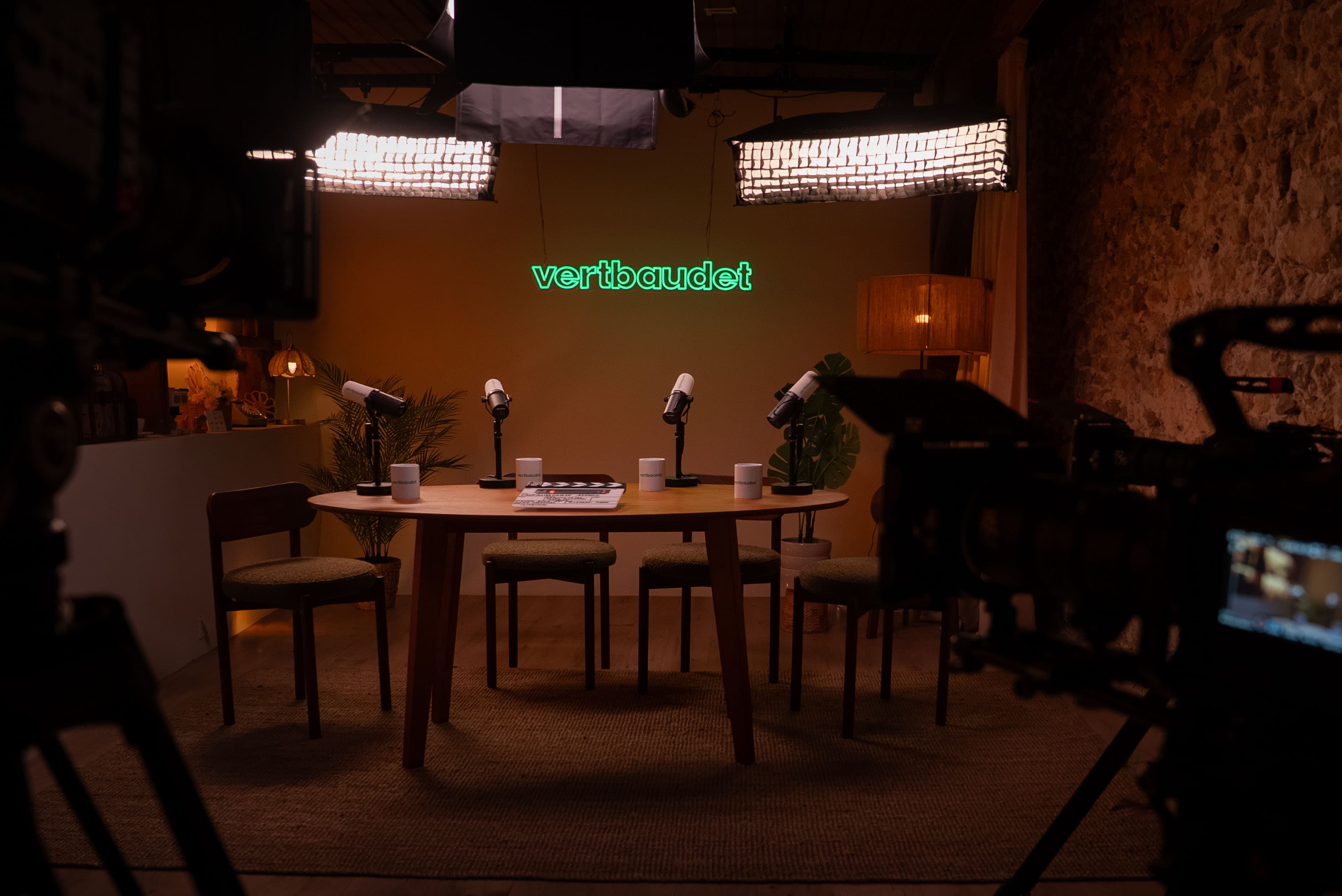
Le podcast vidéo s’impose aujourd’hui comme un format central dans les stratégies de contenu. Longtemps cantonné à l’audio, le podcast a changé de nature. Il se…
In a world saturated with content, podcasts have become far more than a simple audio format. They are a medium in their own right, capable of capturing attentio…