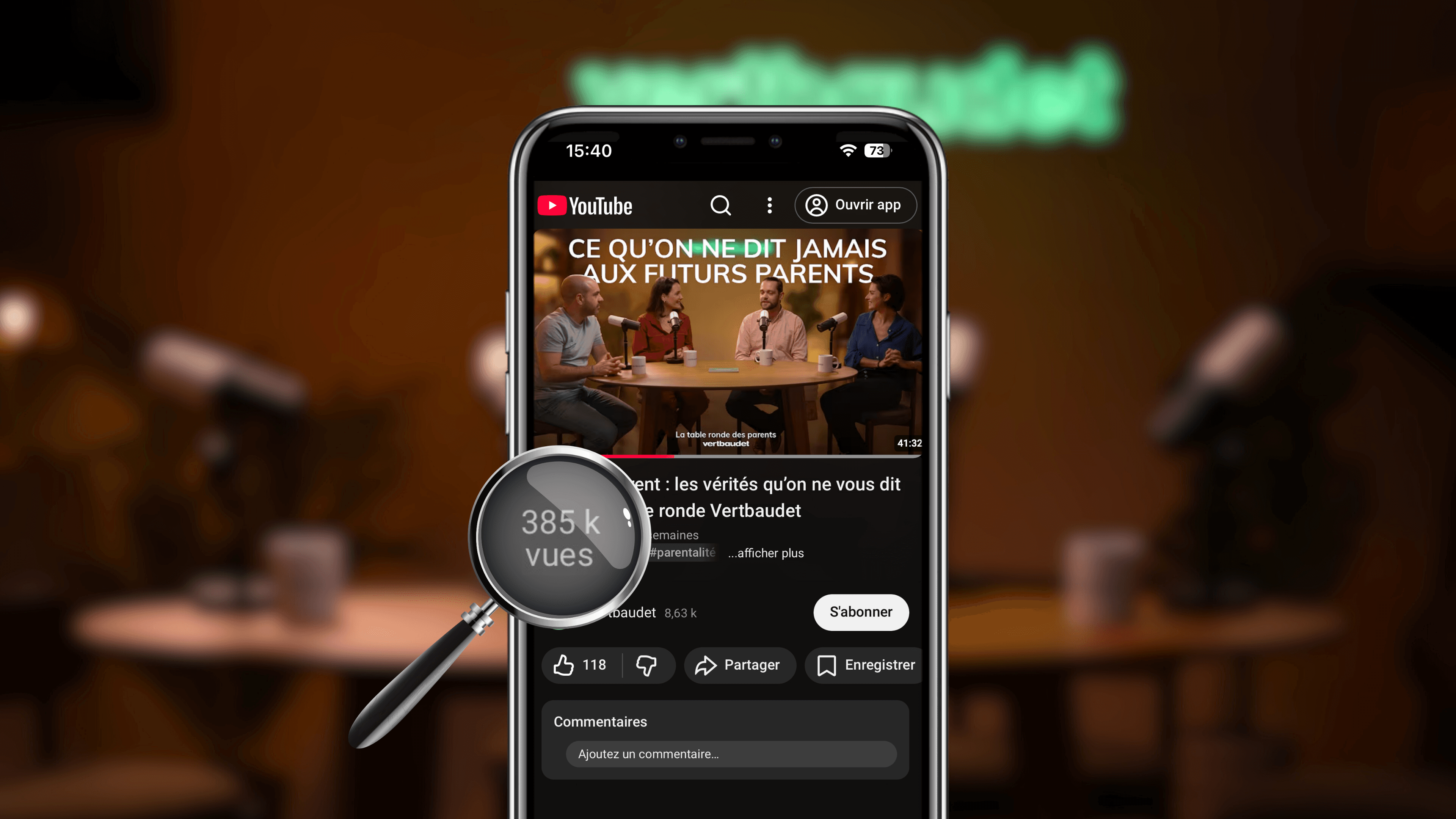
YouTube Podcasts: How to Create a Captivating Video Podcast and Grow an Audience
The YouTube podcast is experiencing spectacular growth. In just a few years, it has evolved from a secondary format into a true pillar of digital content. Today…
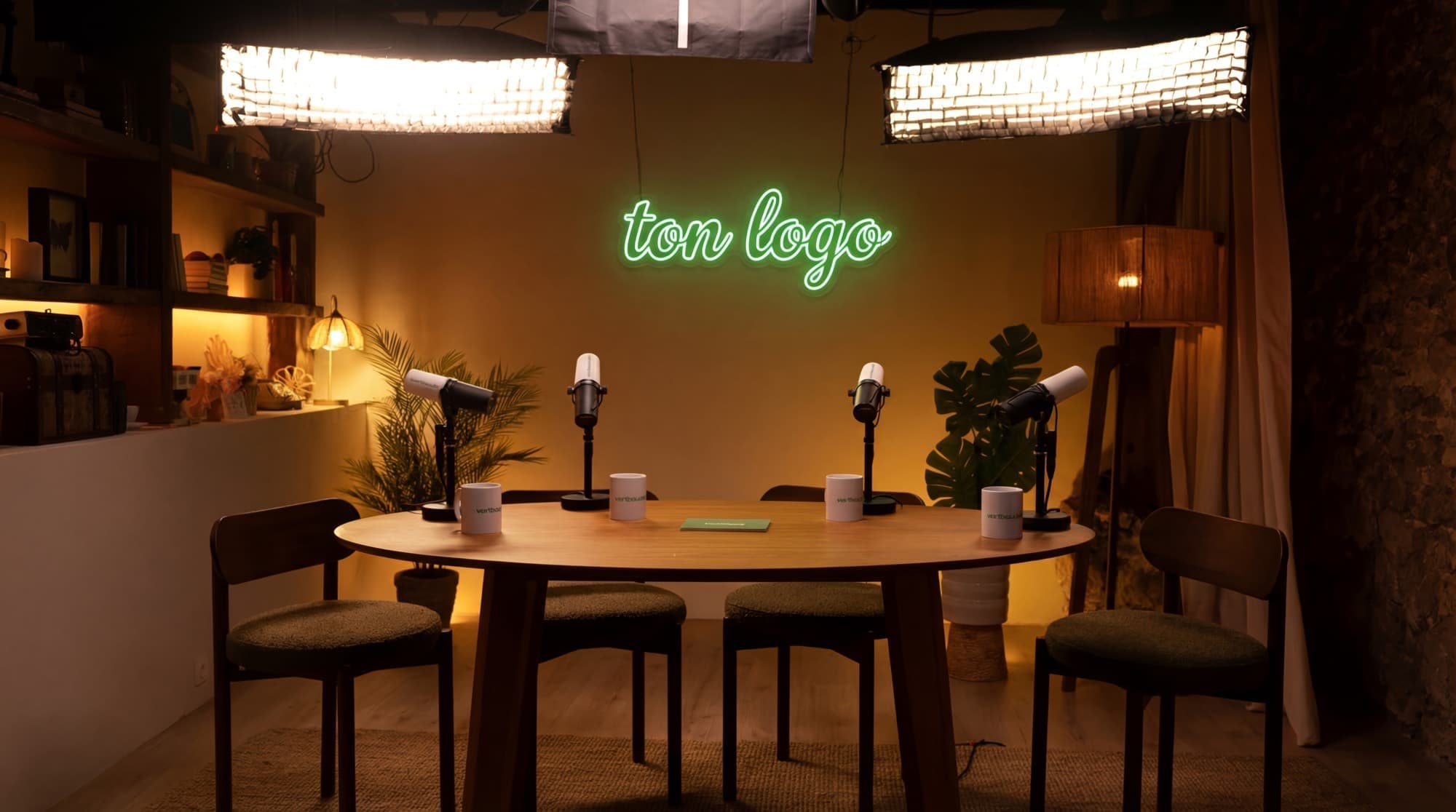
Podcasting has experienced impressive growth over the last few years, and recording in a professional podcast studio is gradually becoming the preferred solution for producing high-quality content. Entrepreneurs, content creators, brands, and experts use this format to share ideas, tell stories, and pass on their expertise. Accessible, authentic, and immersive, podcasts create a direct relationship with the audience.
However, producing a quality podcast isn't just about recording a conversation with a microphone. The recording environment, audio quality, visuals, and editing heavily influence public perception. Relevant content quickly loses its impact when the technical side doesn't keep up.
This is precisely why a professional podcast studio makes so much sense. Unlike an improvised home recording, a studio offers optimal conditions to produce clear, immersive, and credible content.
So, why record your podcast in a professional studio rather than at home? What concrete benefits does this solution bring to your content and your brand image? Let’s explore these points.
Discover the CreativGen studio and transform your podcast idea into high-quality audio and video content.
The success of podcasting is no accident. This format perfectly meets current consumption habits: listening to or watching content while doing something else. Whether commuting, working, or exercising, podcasts easily integrate into daily life.
Businesses have also understood the potential of podcasting. Today, it serves to:
Share expertise
Develop personal branding
Strengthen corporate communication
Create an engaged community
A professional podcast can become a powerful visibility and marketing tool. Some brands even use it as a standalone media outlet to tell their story or interview experts. But to capture attention in a saturated content universe, quality becomes essential.
Many creators naturally start by recording their podcasts at home. It’s simple, cost-effective, and quick to set up. However, this solution quickly shows its limits, especially if the goal is to produce professional content.
A home-recorded podcast can suffer from several issues: irregular audio quality, noisy environments, lack of visual consistency, or technical difficulties. These elements might seem secondary, but they directly influence the viewer or listener's experience.
In a podcast, sound is the central element. If the audio is mediocre, even the best content can become difficult to listen to. Recording at home often exposes you to various types of noise pollution:
Exterior noise (cars, construction, neighbors)
Room reverberation
Echo due to hard surfaces
Volume variations between speakers
Without proper acoustic treatment, these problems become noticeable very quickly. Professional studios, on the contrary, are designed to eliminate these disturbances. Walls, materials, and room configurations are designed to absorb resonance and offer a clear, balanced sound. The result: a much more pleasant listening experience.
Another frequent obstacle concerns equipment. A home-recorded podcast often uses basic gear: a USB mic, simple headphones, and basic recording software. This might be enough to start, but limits appear quickly.
A professional podcast studio provides much more powerful equipment:
Broadcast-quality microphones
Professional audio interfaces
Mixing consoles
High-definition cameras
Tailored lighting
This type of equipment immediately improves the overall quality of the podcast. The sound is sharper, the voice more natural, and the image more pleasing to watch.
Recording a podcast at home also requires managing several technical aspects simultaneously. You have to:
Check sound levels
Monitor the recording
Adjust mic placement
Manage lights (if the podcast is filmed)
All this can quickly become stressful, especially during an important interview. In a professional studio, these constraints disappear. The technical team handles the adjustments while the participants can focus solely on the conversation. This detail often makes all the difference in the flow of an episode.
Today, many podcasts are also filmed for distribution across different platforms. The image thus becomes an important element. An improvised set in a living room or office might work for informal content, but for a company or an expert wishing to strengthen their credibility, it can give a less professional impression.
A podcast studio offers a consistent visual environment:
Professional set design
Optimized lighting
Professional framing
Coherent visual atmosphere
The goal is simple: create an immersive experience that enhances the speakers and the content.
In the podcast world, first impressions play a decisive role. Listeners often decide within seconds whether to continue listening or move to other content. Clear sound, polished visuals, and a professional environment immediately reinforce a podcast's credibility.
Conversely, insufficient technical quality quickly gives the impression of amateur content, even when the subject is interesting. This is why more and more creators and companies record in professional studios. This solution improves the final output while simplifying production.
Creating a podcast at home seems simple at first. Many start with a mic, a laptop, and a desk corner. On paper, the setup seems sufficient. In reality, the situation often becomes complex.
Over time, obstacles appear: technical quality varies, organization becomes harder, editing takes longer, and visual consistency remains limited. These constraints often slow down a podcast's progress, especially when the goal is to produce professional, regular content.
Producing a podcast requires much more than just pressing "record." Behind every episode, there are several technical steps that can quickly become time-consuming. At home, you often have to manage:
Mic placement
Sound level management
Audio and video recording
Equipment checks
Troubleshooting technical issues
And of course, these must be monitored while simultaneously holding a conversation. A misplaced mic or a disconnected cable can ruin an entire episode—and unfortunately, you might only realize it after the recording is done. In a professional studio, these aspects are handled by technicians or an optimized configuration.
A home-recorded podcast often requires much more production time than initially imagined. For a 30-minute episode, you generally need to:
Prepare equipment
Test microphones
Adjust lighting
Check cameras
Record the episode
Transfer files
Perform the edit
Altogether, one episode can easily represent several hours of work. In a professional studio, the setup is already ready. Gear is installed, calibrated, and optimized. Recording can start immediately, saving precious time.
Filming podcasts transforms them into full video content, which changes production requirements. Home recordings often face visual hurdles: improvised sets, irregular lighting, or distracting backgrounds. A professional studio offers a set designed for the camera, studied camera angles, and a coherent visual environment.
When producing a podcast alone, certain mistakes recur:
Speaking too far from the mic
Recording in a room with too much echo
Using insufficient lighting
Forgetting to check audio levels
Neglecting the final edit
A professional studio helps avoid most of these errors, ensuring a smoother, more professional result.
For a company or an expert, the podcast is a strategic communication tool. The quality of the content directly reflects the brand's image. A podcast recorded in good conditions immediately conveys a sense of seriousness. This is why many brands choose professional studios to guarantee a high-quality result and reinforce project credibility.
Facing the limits of home recording, more creators are choosing professional studios. It’s not just about comfort; a studio brings concrete advantages:
Sound dominates the experience. Professional studios offer optimal acoustic conditions. Materials and room layouts are designed to reduce echoes and absorb background noise.
Result: Clearer sound, natural voices, and a comfortable listening experience.
Multi-camera setups and professional lighting create an immersive experience. The viewer doesn't just watch a discussion; they enter a universe.
The "arrive, record, leave" workflow allows you to focus on the essential: the conversation and the value provided to the audience.
A professional studio offers a comfortable, calm, and impressive setting. Guests feel more at ease, making the conversation more natural and fluid.
While you can start at home to test a concept, a studio is justified when:
The podcast becomes a corporate communication tool.
You have regular high-profile guests.
The podcast is filmed for video platforms.
Technical quality becomes essential for brand image.
Discuss your project with the CreativGen team and discover how to produce a professional podcast that captures your audience's attention.
Podcasting is now an essential tool for sharing ideas and building a brand. In a competitive landscape, production quality is the deciding factor. A professional podcast studio guarantees clear sound, polished visuals, and an environment perfectly suited for creation.
Whether you are launching a brand podcast, a corporate podcast, or an ambitious personal project, a professional studio enhances your content and strengthens its impact.
Is it useful to record in a professional studio? Yes, it provides better audio/video quality, acoustic treatment, and technical assistance that significantly improves the final result.
Can I record a professional podcast at home? It is possible to start at home, but you will quickly face limits in sound quality, lighting, and decor. A studio offers much more optimal conditions.
How much does it cost? Prices depend on the studio, recording duration, and included services (editing, video capture). Many studios offer packages tailored to creators and businesses.
What equipment is used in a professional studio? Broadcast-quality mics, professional interfaces, HD cameras, and studio-grade lighting.
Why do companies use podcast studios? To produce high-quality content that reinforces their brand image and provides a professional platform for their expertise.
Quick confirmation · No upfront payment
The YouTube podcast is experiencing spectacular growth. In just a few years, it has evolved from a secondary format into a true pillar of digital content. Today…
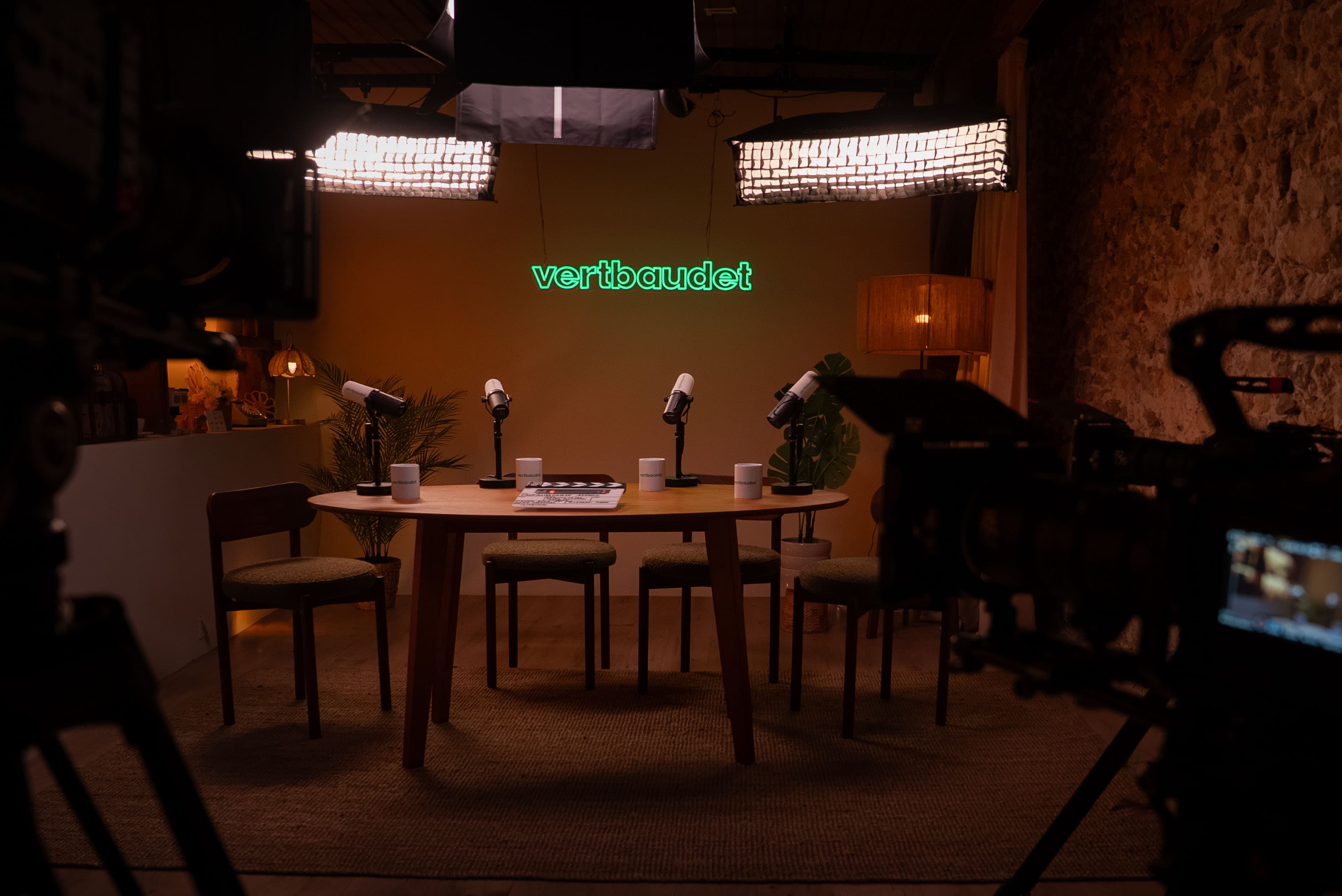
Le podcast vidéo s’impose aujourd’hui comme un format central dans les stratégies de contenu. Longtemps cantonné à l’audio, le podcast a changé de nature. Il se…
In a world saturated with content, podcasts have become far more than a simple audio format. They are a medium in their own right, capable of capturing attentio…